Articles by

SPB型三角带 

SPB type V-belt

The SPB type V-belt belongs to the **Narrow V-Belt** series and is one of the most widely used models in industrial transmission systems. Compared to the SPA type, the SPB type has a larger cross-section and greater load capacity, making it suitable for medium to high power equipment and heavy load conditions, achieving more efficient power transmission in limited installation space. The SPB type V-belt is made of high-quality rubber, high-strength polyester cord, and wear-resistant cover fabric, featuring wear resistance, oil resistance, heat resistance, anti-static properties, and stable operation, meeting the demands of continuous operation and high-load work. (Unit: mm, indicating pitch length) ✅ High transmission power, strong load capacity ✅ High tensile strength, not easy to elongate ✅ Wear-resistant, long service life ✅ High temperature and oil resistance ✅ Smooth operation, low noise ✅ Suitable for high-speed and heavy load transmission Widely used in: The SPB type V-belt, with its higher transmission capacity and excellent durability, has become the ideal choice for the power transmission systems of medium to large industrial equipment, effectively improving equipment operating efficiency and reducing maintenance costs.

Read More
SPA型三角带 

SPA type V-belt

The SPA type V-belt belongs to the Narrow V-Belt series and complies with international standards ISO and DIN specifications. Compared to ordinary A type V-belts, the SPA type has higher transmission efficiency and load capacity, capable of transmitting greater power under the same spatial conditions, thus being widely used in modern industrial transmission systems. The SPA type V-belt is made of high-quality chloroprene rubber (CR) or natural rubber as the main material, equipped with high-strength polyester cord as the tensile layer, featuring wear resistance, heat resistance, anti-static properties, and smooth operation, meeting the demands of continuous operation and heavy load conditions. (Unit: mm, indicating pitch length) ✅ High transmission power, high efficiency ✅ Wear-resistant, long service life ✅ High tensile strength, not easy to elongate ✅ Smooth operation, low vibration ✅ Oil resistant, heat resistant, anti-static ✅ Suitable for high-speed heavy load transmission Widely used in: The SPA type V-belt, with its efficient, durable, and space-saving characteristics, has become a widely used narrow V-belt product in industrial equipment transmission systems, effectively improving equipment operating efficiency and reducing maintenance costs.

Read More
O型三角带 

O type V-belt

O type V-belt product description (including size specifications) The O type V-belt (O Section V-Belt) is a lightweight industrial transmission belt made of high-quality rubber and high-strength polyester cord, featuring good flexibility, smooth operation, and high transmission efficiency. The product is suitable for small power machinery and can effectively reduce vibration and noise, improving equipment operating stability. ✅ Strong flexibility, suitable for small pulley transmission ✅ Wear-resistant, long service life ✅ Smooth operation, low noise ✅ High transmission efficiency ✅ Simple installation and maintenance The O type V-belt is particularly suitable for light load, high-speed transmission equipment, providing an economical and practical power transmission solution that can effectively enhance equipment operating efficiency and reduce maintenance costs.

Read More
SPC型三角带

SPC Type V-Belt

Product Introduction SPC type V-belts belong to the narrow V-belt series and are a type of high-efficiency, high-load industrial transmission belt. Compared to ordinary C-type V-belts, SPC type has a narrower structural design and higher transmission capacity, capable of transmitting greater power in the same space, widely used in heavy industry, high-speed equipment, and high-load mechanical systems. SPC type V-belts are made from high-quality rubber, high-strength polyester cords, or aramid cords, featuring wear resistance, heat resistance, high tensile strength, and stable operation. SPC type V-belt standard specifications Parameters Size Top Width (W) 22 mm Height (H) 18 mm Angle 40° Common Model Range SPC1000 SPC1250 SPC1500 SPC2000 SPC3000 SPC5000 Custom lengths are supported. Product Structure 1. Top Rubber Layer Made of wear-resistant and heat-resistant rubber to protect the internal structure. 2. High-Tensile Layer Made of high-strength polyester cords or aramid core cords to enhance load-bearing capacity and fatigue resistance. 3. Buffer Rubber Layer Enhances flexibility, reduces operational vibrations and impacts. 4. Bottom Rubber Layer Enhances friction performance, improving power transmission efficiency. 5. Cover Layer Provides wear resistance, anti-slip, and aging resistance. Product Features High transmission efficiency Strong load-bearing capacity Compact structure Wear-resistant and aging-resistant Good anti-static performance Stable operation…

Read More
D型三角带

Type D V-Belt

Product Introduction D-type V-belts are heavy-duty industrial transmission V-belts with larger cross-sectional dimensions and stronger load-bearing capacity, suitable for high-power, heavy-load, and large mechanical equipment transmission systems. The product is made from high-quality rubber, high-strength polyester cords, and wear-resistant cover fabric, featuring excellent tensile performance, wear resistance, and stable transmission performance. Compared to A and B type V-belts, D type V-belts are suitable for larger power and higher torque industrial equipment, making them important transmission components commonly used in mining, metallurgy, and heavy machinery fields. Product Specifications D-type V-belt standard dimensions Parameters Size Top Width (W) 32 mm Height (H) 19 mm Angle 40° Common Length Range D1000 – D8000 Supports both imperial and metric specifications Custom lengths are available. Product Structure 1. Top Rubber Layer Made of wear-resistant and heat-resistant rubber materials to protect the internal structure from external damage. 2. Tensile Layer Uses high-strength polyester cords or aramid cords to enhance the belt's load-bearing capacity and stability. 3. Buffer Rubber Layer Reduces operational impacts and vibrations, improving flexibility and fatigue resistance. 4. Bottom Rubber Layer Enhances friction performance between the belt and pulley, improving transmission efficiency. 5. Cover Layer Provides anti-slip, wear-resistant, high-temperature, and aging-resistant properties. Product Features Extremely strong load-bearing capacity Suitable for high-power equipment Excellent impact resistance Wear-resistant and aging-resistant Stable operation High transmission efficiency Good anti-static performance…

Read More
C型三角带

Type C V-Belt

Product Introduction C-type V-belts are heavy-duty industrial V-belts with larger cross-sectional dimensions and higher load-bearing capacity, suitable for high-power, heavy-load mechanical equipment transmission. The product is made from high-quality rubber, high-strength polyester cords, and wear-resistant cover fabric, featuring stable transmission, wear resistance, impact resistance, and long service life. Compared to A and B type V-belts, C type V-belts are more suitable for heavy industry and continuous high-load operating environments. Product Specifications C-type V-belt standard dimensions Parameters Size Top Width (W) 22 mm Height (H) 14 mm Angle 40° Common Length Range C500 – C6000 Supports both imperial and metric specifications Custom lengths can be tailored to equipment. Product Structure 1. Top Rubber Layer Made of wear-resistant rubber materials to protect the internal structure of the belt. 2. Tensile Layer Uses high-strength polyester cords or aramid cords to enhance load-bearing capacity and tensile strength. 3. Buffer Rubber Layer Enhances flexibility, reduces operational vibrations and impacts. 4. Bottom Rubber Layer Increases friction with the pulley, enhancing transmission efficiency. 5. Cover Layer Provides wear resistance, anti-slip, and high-temperature properties. Product Features Strong load-bearing capacity Suitable for high-power transmission Wear-resistant and aging-resistant Stable operation Excellent impact resistance High transmission efficiency Low noise…

Read More
B型三角带

Type B V-belt

Product Introduction B-type V-belts are common industrial transmission belts that belong to the standard V-belt series, made from high-quality rubber, polyester cords, and wear-resistant cover fabric. Their cross-sectional dimensions are larger than A-type, allowing for higher power transmission, widely used in industrial machinery, agricultural equipment, fans, pumps, and power transmission systems. B-type V-belts feature stable transmission, shock absorption, low operational noise, and easy maintenance, making them one of the most widely used transmission components in industrial equipment. Product Specifications B-type V-belt standard dimensions Parameters Size Top Width (W) 17 mm Height (H) 11 mm Angle 40° Common Length Range B500 – B5000 Supports both imperial and metric specifications Custom lengths can be tailored. Product Structure 1. Top Rubber Layer Features wear resistance, heat resistance, and aging resistance to protect the internal structure. 2. Tensile Layer Uses high-strength polyester cords or aramid cords to enhance tensile performance and stability. 3. Buffer Rubber Layer Enhances flexibility, reduces operational vibrations and impacts. 4. Bottom Rubber Layer Increases friction performance, enhancing transmission efficiency. 5. Cover Layer Provides wear resistance and anti-slip properties, extending service life. Product Features High transmission efficiency Strong load-bearing capacity Wear-resistant and aging-resistant Good anti-static performance Stable operation Low noise Good shock absorption…

Read More
绝缘橡胶板

Insulating rubber sheet

Product Description Insulating rubber sheets are primarily used for insulation protection around electrical work and live equipment, and can be laid in areas such as distribution rooms, substations, in front of control cabinets, and maintenance passages, serving the purpose of insulation isolation and slip protection. The product has a smooth surface and dense material, providing good wear resistance and rebound, suitable for long-term use. Common Specifications Material: Insulating rubber (custom formulations available upon request) Color: Black / Red (customizable) Surface: Smooth / Anti-slip pattern Thickness: 3 / 5 / 6 / 8 / 10 mm (common, customizable 2–20 mm) Width: 1–2 m (customizable) Length: 10 m/roll (customizable) Working Temperature: Approximately -20 ~ +80°C (adjustable based on formulation) Insulation Grade (selectable as needed) Common Voltage Levels: 5kV / 10kV / 15kV / 25kV / 35kV (available according to standards or customer requirements) Performance Features (selling points) Insulation Protection: For safe isolation in electrical work areas Wear-resistant and Durable: Suitable for high-frequency foot traffic and long-term laying Anti-slip Safety: Optional anti-slip patterns enhance operational safety Easy to Cut and Lay: Can be cut to site dimensions for convenient installation Application Scenarios Distribution Rooms/Substations: Ground insulation protection…

Read More
橡胶制品的保养与维护

Maintenance and care of rubber products

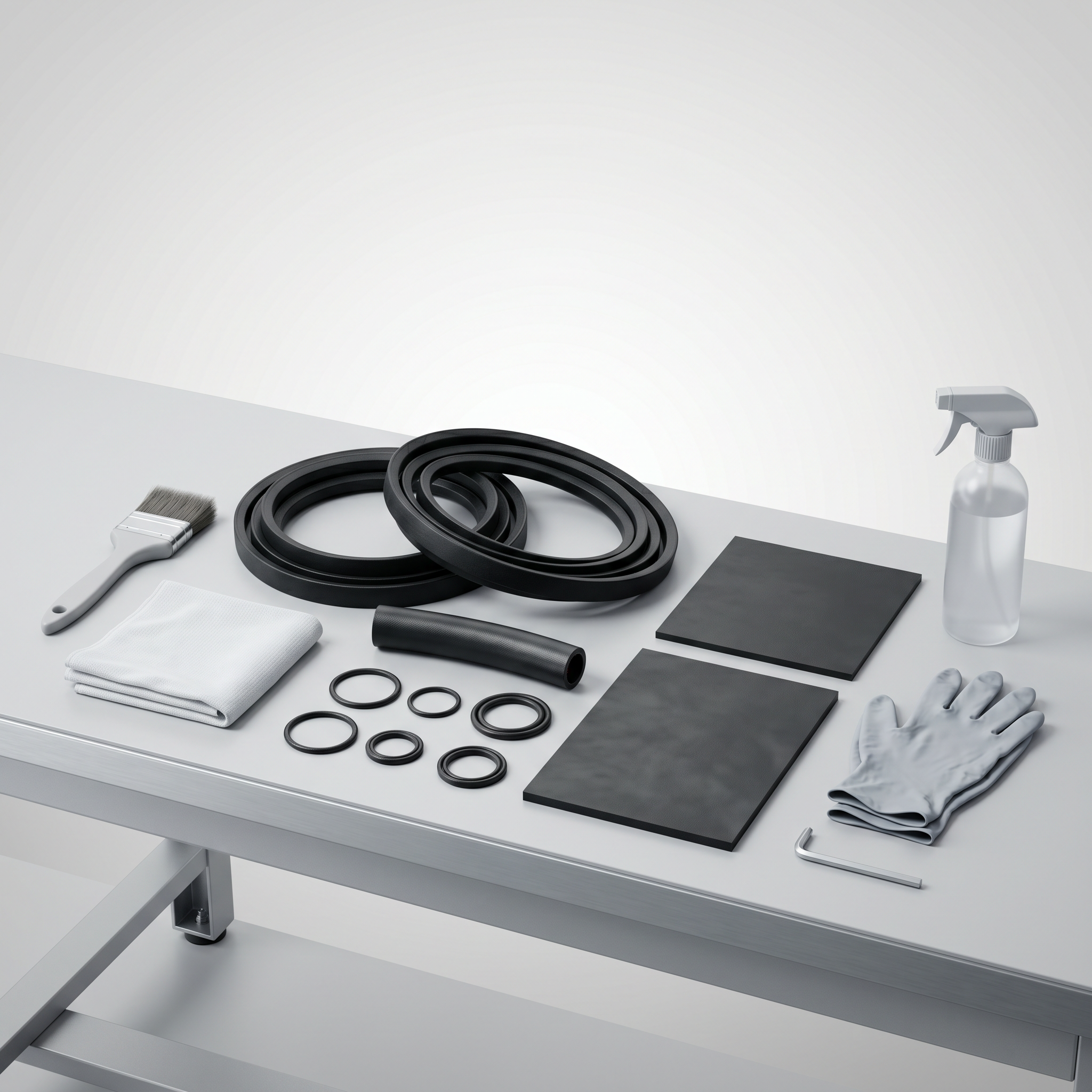
Maintenance and Care of Rubber Products: A Practical Guide to Extending Service Life Rubber products are widely used in industrial transmission, sealing protection, shock absorption, and anti-slip applications. The advantages of rubber include good elasticity, wear resistance, and ease of processing, but it is also susceptible to aging due to temperature, ultraviolet light, ozone, oils, chemical media, and long-term stress. Proper daily maintenance can significantly extend service life and reduce downtime and replacement costs. 1. Common Causes of Rubber Aging High temperatures and thermal cycling: Prolonged high temperatures can accelerate hardening and cracking; repeated thermal fluctuations can lead to fatigue. Ozone and ultraviolet light: Outdoor or high-ozone environments can easily cause surface micro-cracks. Oil/solvent erosion: Incompatible media can cause swelling, softening, adhesion, or strength reduction. Prolonged stretching, squeezing, and friction: Can lead to permanent deformation, wear, or localized cracking. Moisture and contaminants: Water, dust, and metal shavings can accelerate wear and corrosion at mating surfaces. 2. Daily Cleaning: Simple but Crucial In dry dusty environments: Use a soft brush or dry cloth to clean surface dust, avoiding secondary wear from sand particles. In oily environments: Wipe with a neutral detergent, then rinse with water/wet cloth and dry. Avoid using strong acids, strong bases, gasoline, or other strong solvents for direct cleaning (unless materials are explicitly compatible). Recommendation: After cleaning, keep dry to avoid long-term moisture leading to rust or mold affecting adhesion. 3. Storage and Transport: Control "Light, Heat, Pressure, Ozone" Storage Environment: Cool, dry, and ventilated; avoid direct sunlight and high-temperature heat sources. Keep away from ozone sources: Such as motor brushes, ozone generators, high-voltage electrical equipment, etc. Avoid heavy pressure deformation: Rubber sheets/pads should not be pressed under heavy objects for long periods; rolled materials should avoid flattening the core. Prevent contact with chemicals: Oils, solvents, and corrosive liquids should be stored separately. 4. Key Points for Use and Installation (Common for Different Products) Rubber Sheets/Pads Clear sharp objects and sand from the base before laying to avoid local piercing or wear. Cut with a sharp tool in one go to avoid pulling and tearing edges. Keep anti-slip textured surfaces clean; oil contamination can significantly reduce friction and requires more frequent cleaning. Rubber Seals/Pads Pre-installation checks: Look for burrs, scratches, or gaps; ensure sealing surfaces are clean and flat. Avoid excessive pre-tightening: Over-tightening can lead to extrusion, edge cutting, or permanent deformation; install according to recommended torque. Ensure compatibility with media: For example, oil resistance suggests choosing NBR, ozone/weather resistance can choose EPDM, depending on specific working conditions. Transmission Belts (such as V-belts) Tension: Too loose can cause slippage and heating, too tight can damage bearings and belts; adjust according to equipment manuals. Clean wheel grooves: Oil, rust, or debris in the grooves can affect friction and lifespan. Group Replacement: When multiple belts are used in parallel, it is recommended to replace them as a group to avoid uneven stress due to inconsistencies between new and old belts. 5. Regular Inspections: Use "Phenomena" to Determine Replacement Needs It is recommended to establish a regular inspection frequency (e.g., weekly/monthly), focusing on: Surface cracking, powdering, hardening (noticeable hardness change/loss of elasticity) Abnormal swelling, stickiness, softening (often related to incompatible media or excessive temperature) Edge tearing, delamination, localized gaps Permanent deformation (indentations that do not rebound, significant uneven thickness) Abnormal operation (belt noise, slippage, significant temperature rise)…

Read More

A型三角带

Type A V-belt

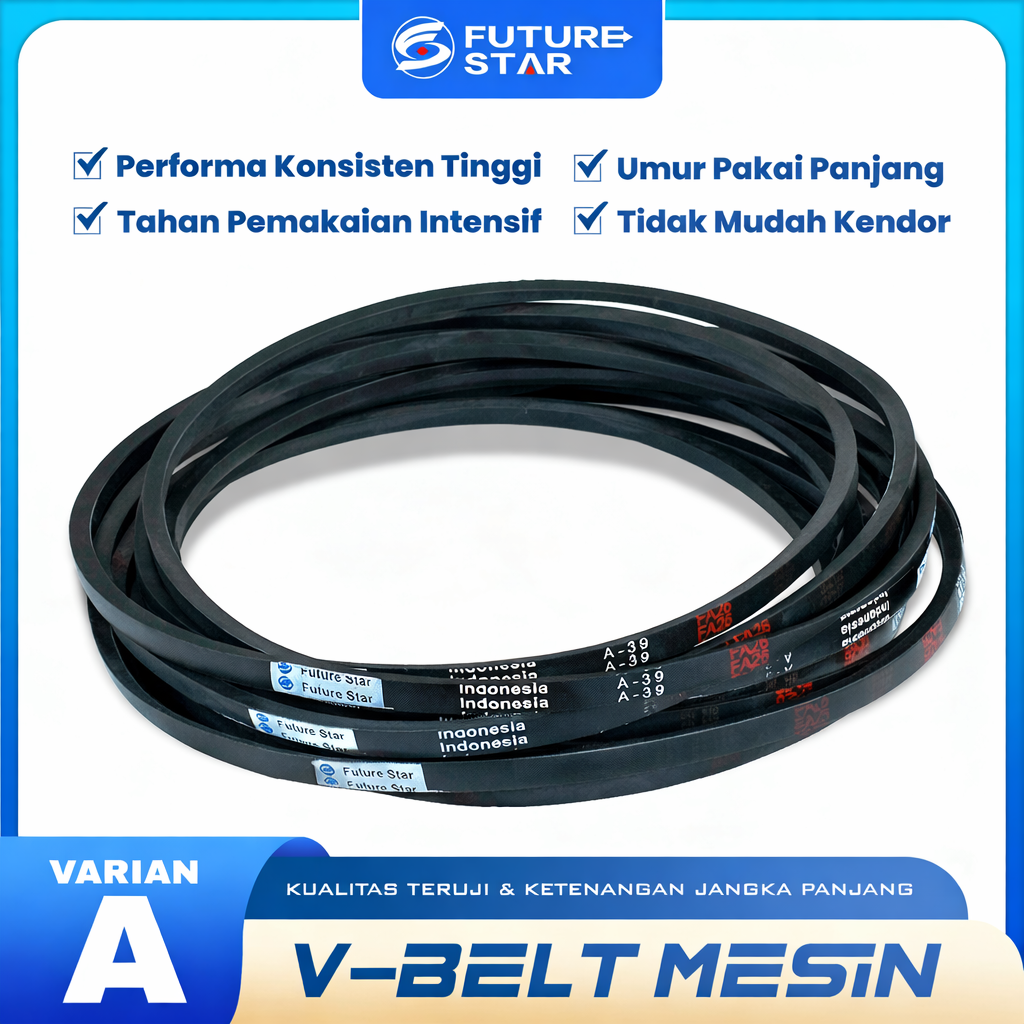
Product Description A-type V-belts are commonly used industrial transmission belts with a trapezoidal cross-section that transmit power through the wedging action with the pulley grooves. They are suitable for fans, pumps, compressors, agricultural machinery, conveying equipment, and other scenarios, featuring smooth transmission, low noise, and easy maintenance. Main Specifications (Common Standards) Belt Type: A-type (Classical V-Belt) Top Width (W): Approximately 13 mm Height (H): Approximately 8 mm Angle: Approximately 40° Length Markings: Commonly include Li / Lw / La (different standards correspond to different reference lengths) Li: Inside length Lw / Lp: Pitch length La: Outside length Material and Structure (can be detailed on the product page) High-strength cord layer (polyester/aramid optional) + wear-resistant rubber cover layer High tensile strength, low elongation, wear-resistant, heat-resistant Performance Features (selling points) High transmission efficiency, stable operation Wear-resistant, fatigue-resistant, long service life Aging-resistant, heat-resistant (suitable for most industrial environments) Complete specifications, can be used in single or multiple belt configurations.

Read More
耐油橡胶版

Oil-resistant rubber sheet

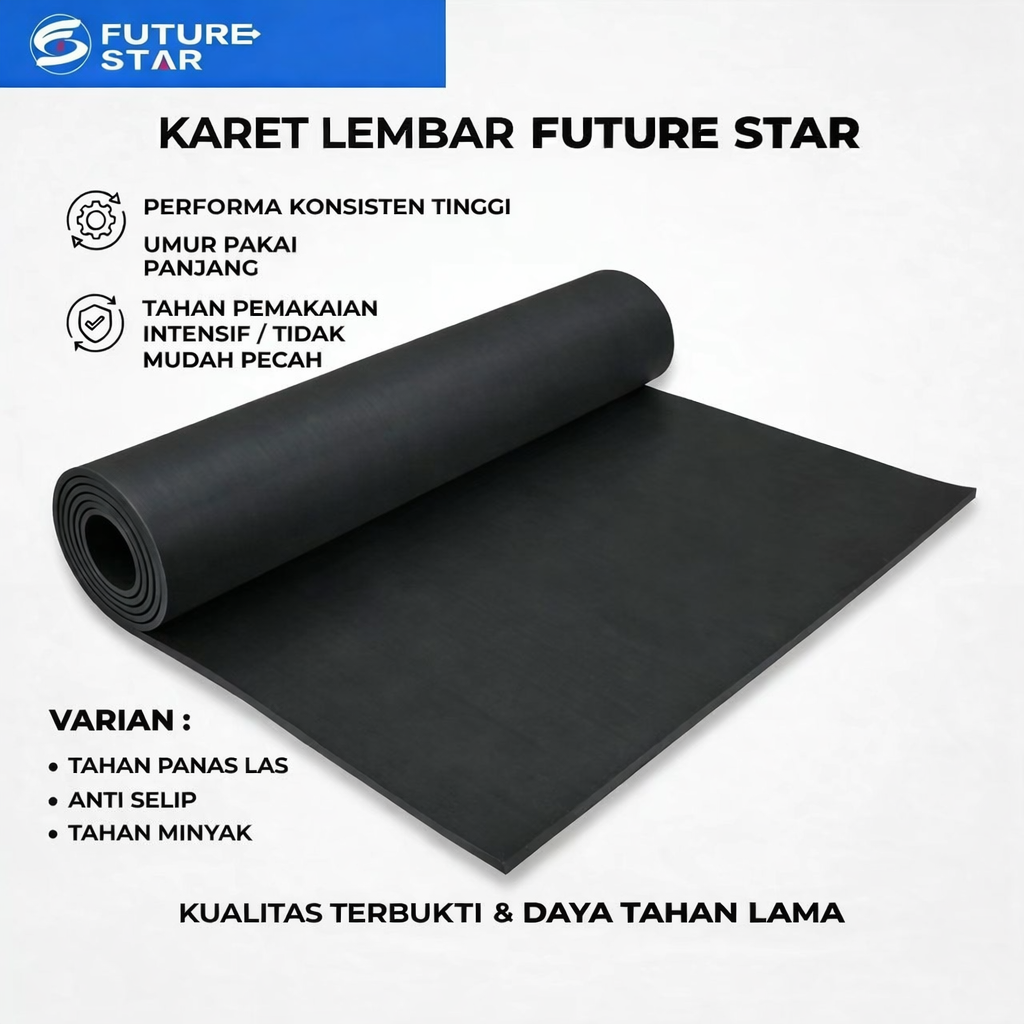
Oil-resistant rubber sheet product details Product introduction The oil-resistant rubber sheet is made from nitrile rubber (NBR) as the main raw material, processed through mixing, calendering, and vulcanization to create industrial rubber sheets. The product has excellent oil resistance, wear resistance, and sealing performance, widely used in machinery, petrochemicals, automotive manufacturing, electricity, and industrial sealing fields. The oil-resistant rubber sheet can be in long-term contact with various oil media without easily swelling, deforming, or aging, making it an important sealing and protective material commonly used in industrial equipment. Product structure 1. Surface rubber layer Has good wear resistance, anti-slip, and oil resistance, effectively protecting the surface of equipment. 2. Rubber main layer Uses high-quality nitrile rubber or composite rubber formula to enhance overall oil resistance and flexibility. 3. Reinforcement layer (optional) Some high-strength products can add a fiber cloth reinforcement layer to improve tensile strength and pressure resistance. Product features Excellent oil resistance Resistant to diesel, engine oil, hydraulic oil Wear-resistant and aging-resistant Good sealing performance Strong flexibility Stable pressure resistance Easy to cut and process Long service life Product specifications Thickness (mm) Width (m) Length (m) Hardness (Shore A) 1 - 3 1 - 2 10 - 30 60±5 4 - 6 1 - 2…

Read More
帘子线胶管

Corded rubber hose

Product introduction The corded rubber hose is an industrial rubber hose reinforced with high-strength cord, widely used for the transportation of air, water, oil, steam, and some chemical media. The product is composed of a high-quality inner rubber layer, multi-layer cord winding or woven layer, and a wear-resistant outer rubber layer, featuring high pressure resistance, good flexibility, and wear and aging resistance. The corded rubber hose typically consists of the following three parts: Specifications support customization, allowing for different pressure levels and materials based on working conditions. The corded rubber hose is widely used in: Depending on different working conditions, it can provide: Cord as the hose skeleton material, which has high strength, fatigue resistance, dimensional stability, and excellent adhesion properties with rubber, significantly improving the overall pressure resistance and durability of the hose. Supports: Length customization Pressure level customization Joint customization Oil-resistant/high-temperature/acid and alkali resistant customization OEM brand processing Applicable media Air Water Hot water Steam Hydraulic oil Diesel Lubricating oil Some chemical liquids

Read More
石棉橡胶板

Asbestos rubber sheet

Product introduction Asbestos rubber sheet is a sealing material made from high-quality asbestos fibers, rubber, and filler materials through mixing, calendering, and vulcanization processes, featuring good heat resistance, pressure resistance, and sealing performance. The product is widely used in flange sealing, machinery, pipe connections, electricity, chemicals, and industrial boilers. Asbestos rubber sheets can work stably in high-temperature and high-pressure environments for a long time, making it one of the commonly used important materials in traditional industrial sealing fields. Asbestos rubber sheets mainly consist of the following materials: Enhanced product heat resistance, pressure resistance, and tensile strength, improving overall stability. Uses natural rubber or nitrile rubber as bonding materials to enhance flexibility and sealing performance. Improves aging resistance, oil resistance, and corrosion resistance, making the product suitable for complex working conditions. Supports special size and performance customization. Suitable for general industrial equipment sealing. Suitable for oil media environments, such as diesel, lubricating oil, hydraulic oil, etc. Suitable for high-temperature and high-pressure steam and pressure pipeline systems. Has higher heat and corrosion resistance. Widely used in: Can maintain stable sealing effects in high-temperature environments. Effectively prevents gas and liquid leakage. Suitable for various industrial oil media. Lower cost, easy maintenance, widely used in industrial applications. Depending on working conditions, it can choose: Supports: Due to the health risks associated with asbestos materials, some countries and industries have gradually restricted their use. In practical applications, it is recommended to choose suitable sealing materials according to local regulations or use asbestos-free rubber sheets as substitutes.

Read More